


Global Health Initiative
From Personal Protection to Population Impact.
A patented wearable dispensing platform designed to help organizations make essential liquid, lotion, and gel solutions immediately accessible across workforces, communities, and public health environments.
What if protection could travel with the person?
A new delivery platform for public health protection.
Protection works better when it is already with you. At population scale, that principle becomes even more powerful.
The same patented wearable architecture can potentially support organizations seeking to place essential personal care and protective formulations directly into the daily routines of defined populations.
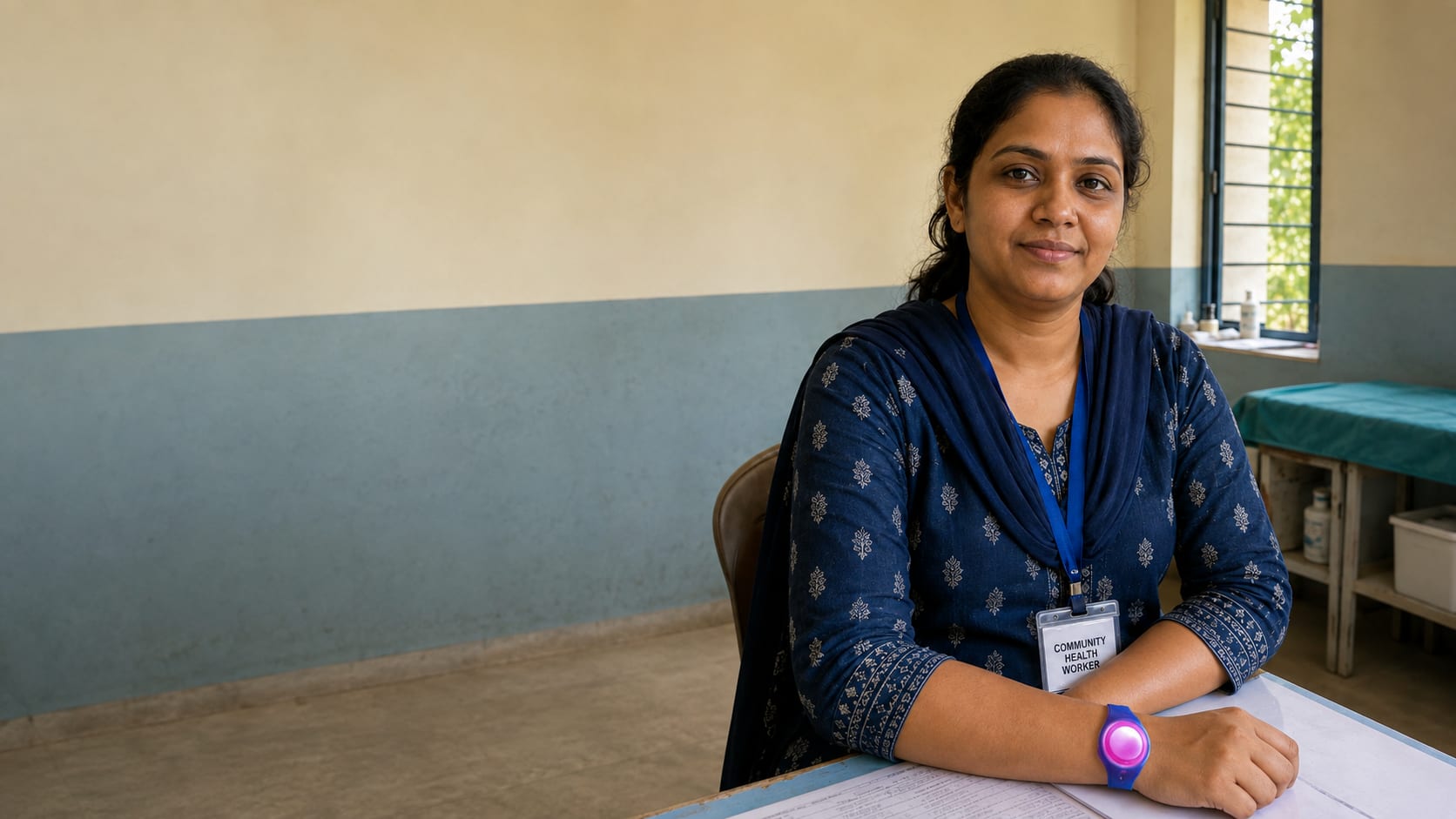
Healthcare workers
Immediate access to sanitization and topical care within demanding clinical environments.
Agricultural workers
Wearable access to personal protection throughout long periods of outdoor exposure.
School communities
Simple, accessible protection designed around the realities of children, teachers, and daily routines.
Outdoor workforces
A wearable delivery platform for environments where traditional containers are inconvenient, forgotten, or inaccessible.
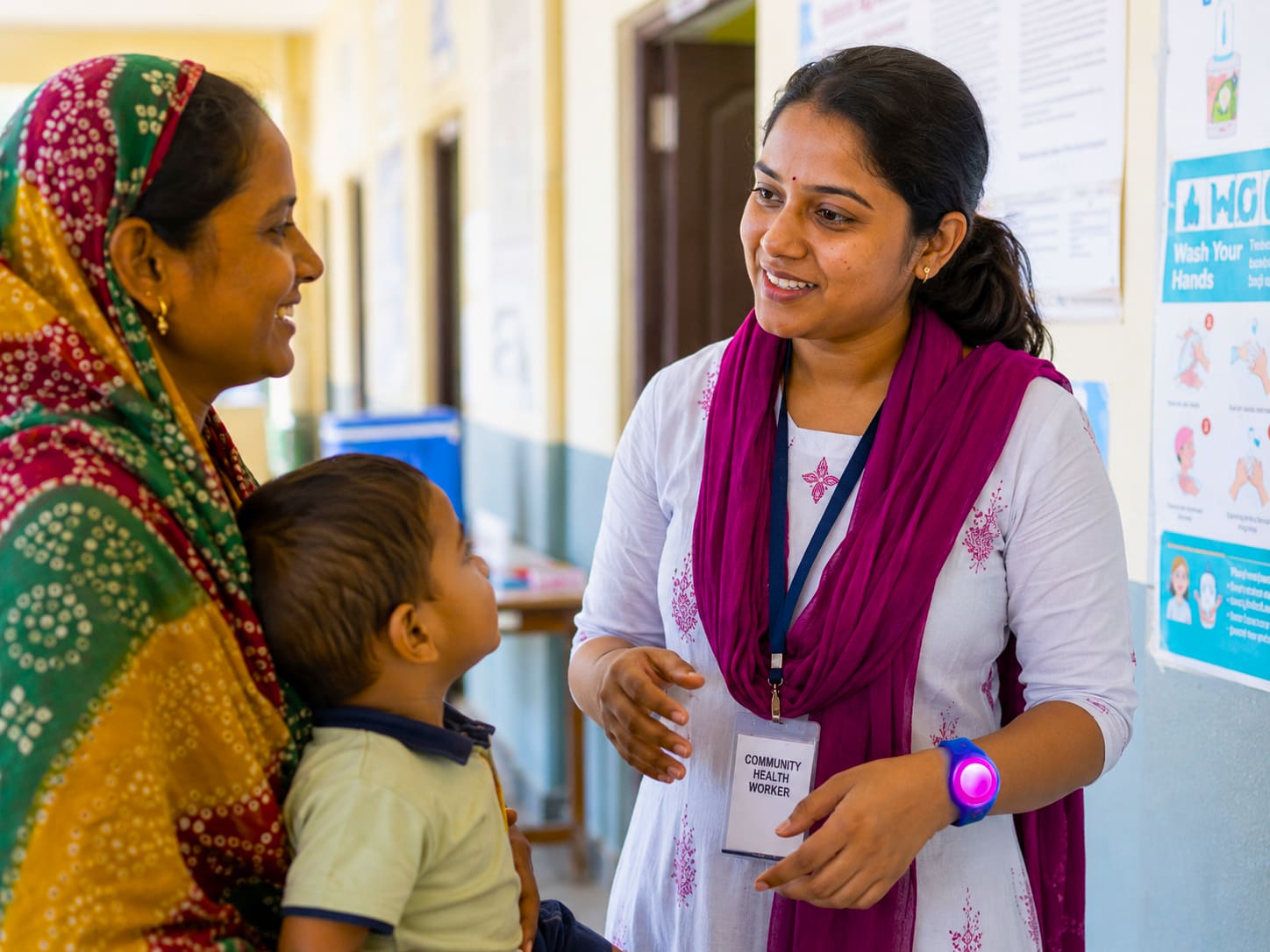
Community health programs
A new distribution model for bringing protective formulations closer to the moment they are actually needed.
Mosquito-exposed populations
A potential platform for improving access to topical repellents as part of broader vector protection strategies.
Public sector initiatives
A scalable architecture that could support health systems, municipalities, NGOs, employers, and public health organizations.
You don't have to build a new ecosystem from the ground up.
WearSpray's architecture can potentially integrate with existing formulations, manufacturing capabilities, distribution systems, healthcare networks, and institutional programs.
That creates opportunities for organizations already serving large populations to transform products traditionally carried in bottles or containers into protection that can be worn, accessed, and applied in seconds.
The opportunity is not simply to introduce another product.
It is to create a new point of access and a new point of action.
Protected architecture. Multiple pathways.
WearSpray has secured patent protection around its wearable dispensing architecture and its evolution into broader wearable and smartwatch integrations.
The intellectual property creates the foundation for applications spanning personal care, healthcare, workforce protection, public health, and connected wearable technology.
One protected architecture can support many formulations, many environments, and many deployment models.
View the issued patentsUnlocking Scalable Protection in High-Density Markets.
A high-margin hardware platform built for high-volume FMCG distribution.
Continuous protection against pathogens and vector-borne diseases fails at the point of reapplication, not formulation. WearSpray’s patented wearable delivery system bridges this compliance gap through ultra-low-cost, refillable hardware designed for localized manufacturing at the point of deployment.
By pairing wearable hardware with high-margin bulk refill consumable ecosystems, WearSpray enables nationwide retail networks and personal care leaders to turn single-use packaging into recurring customer lifetime value.
PDF · Market Opportunity & Strategy Brief
See the addressable audience for the U.S., Europe & Caribbean~$0.94
Refillable hardware projected at low unit cost when manufactured locally at the point of deployment.
A uniquely important environment to test the premise at meaningful scale.
India presents a compelling environment for evaluating wearable, on-demand access to personal protection. High population density, extensive public transit use, outdoor labor, school activity, healthcare work, and daily movement through crowded public environments can increase the importance of convenient reapplication.
Protection against mosquito-borne disease is not limited to nighttime or residential environments. Day-biting mosquitoes, including Aedes species associated with dengue and chikungunya, can create exposure during commuting, school hours, outdoor work, and routine daily activity.
Topical repellents are already available. The behavioral challenge is continued access and repeated application. When protection depends on carrying a separate bottle, compliance may decline precisely when the user is away from home and moving through higher-exposure environments.
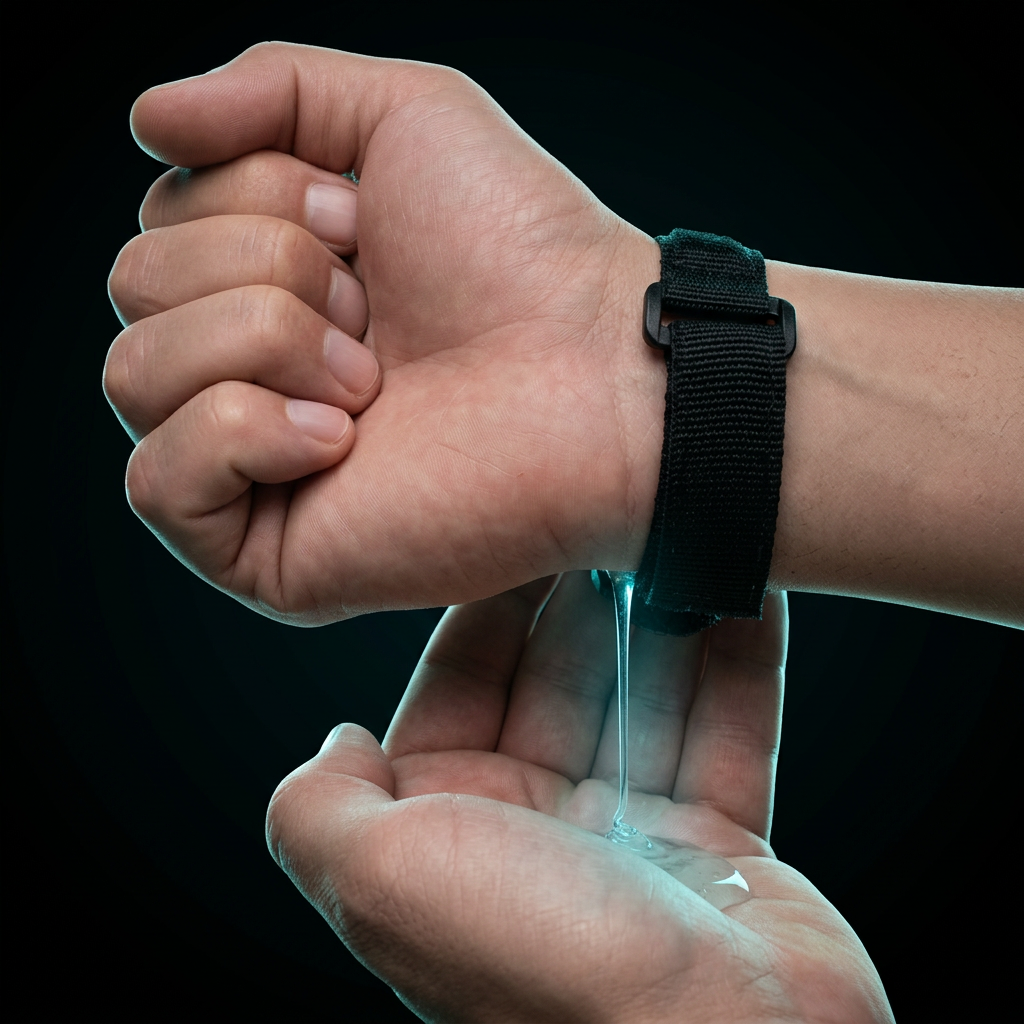
WearSpray is designed to address this access gap by placing a refillable dispensing system directly on the wrist.
Hand sanitization presents a similar behavioral challenge. Awareness of hygiene may be high, but the ability to act immediately can depend on whether sanitizer is physically available at the moment of need.
In crowded transit systems, marketplaces, schools, healthcare environments, logistics operations, and other high-contact settings, carrying and repeatedly retrieving a separate container introduces friction.
WearSpray shifts sanitizer access from a carried object to an on-body dispensing format, reducing the number of steps between awareness and application.
The platform architecture is designed around molded components, refillable reservoirs, and repeat use. This creates the potential to evaluate localized manufacturing in India at progressively larger production volumes.
Localized production could support lower landed costs, reduced transportation complexity, faster replenishment, and greater flexibility for regional distribution partners.
Current cost figures should be treated as projected production economics until validated through regional tooling, material sourcing, manufacturing quotations, and scaled production runs.
The larger opportunity is not limited to the wearable hardware. WearSpray separates the durable dispensing device from the consumable formulation.
This creates the potential for an installed base of reusable hardware supported by recurring purchases of sanitizer, insect repellent, sunscreen, skincare, and other compatible formulations.
For a major FMCG, healthcare, or retail partner, the platform can therefore function as both a dispensing system and a recurring consumable ecosystem.
WearSpray does not require the creation of a new consumable category. It introduces a new delivery architecture across categories that already have recurring demand.
The strategic question is therefore not whether consumers already use these formulations. The question is whether immediate, wearable access can improve convenience, reapplication behavior, and recurring consumption across selected use cases.
Initial evaluation could span a range of high-contact, high-movement settings, identifying where wearable access creates the greatest measurable improvement in convenience, compliance, refill frequency, and overall economics.
When protection is physically present at the point of action, the probability of using it may increase.
India offers a uniquely important environment in which to test that premise at meaningful scale.
Millions of moments. One point of action.
Across public health, personal protection, skincare, sanitation, environmental exposure, and future healthcare applications, the challenge is often the same.
The formulation may already exist.
The science may already exist.
The recommendation may already exist.
But the product isn’t always there when the person needs it. WearSpray is designed around that moment: by turning useful liquids, lotions, gels, and mists from something you must remember to carry into something you wear, the platform creates a new point of access , and a potential new point of action.
Millions of people spend significant time outdoors, where consistent sunscreen access and reapplication can be difficult.
Potential point of action: wearable sunscreen access.
Large populations around the world live with ongoing exposure to mosquito borne disease.
Potential point of action: wearable repellent access.
Healthcare, schools, workplaces, and public environments depend heavily on frequent hand hygiene.
Potential point of action: immediate access to sanitizer.
Topical products create value only when they are available and used consistently.
Potential point of action: skincare, lotion, serum, and protective formulations on the wrist.
Some health situations depend not only on knowing what is happening, but on having the appropriate response immediately accessible.
Future point of action: connected wearable intelligence paired with a physical formulation, subject to development, testing, validation, and appropriate regulatory requirements.
From access today to intelligent action tomorrow.
WearSpray already provides the physical access layer.
As wearable technology continues to evolve, future connected systems could potentially combine sensing, alerts, and contextual intelligence with a formulation that is already being worn.
Sense. Understand. Prompt. Act. Learn.
Future connected wearable applications remain subject to product development, testing, technical integration, and applicable regulatory requirements.
Protection at the point of need.
The sanitizer goes where the caregiver goes.
Healthcare professionals move constantly, between patients, equipment, workstations, doors, carts, monitors, shared surfaces and treatment areas. Each interaction can create another moment when hand hygiene matters.
Research across millions of hand-hygiene opportunities shows compliance can decline as shifts progress and fatigue builds. Yet healthcare-associated infections still affect hundreds of thousands of U.S. patients each year, adding billions in costs.
The challenge is not simply awareness.
It is access at the moment action is required.
hospital patients has a healthcare-associated infection on any given day.
average hand-hygiene compliance reported in healthcare settings without intervention.
estimated annual cost of healthcare-associated infections in the United States.
Figures reflect widely cited public-health estimates (e.g., U.S. CDC / WHO) and are provided for context.
Traditional hand-hygiene infrastructure depends largely on sinks and fixed sanitizer dispensers positioned throughout a facility. WearSpray introduces another access point.
For healthcare environments and personnel where wearable devices are appropriate, WearSpray can carry an approved sanitizing formulation directly on the wrist. Instead of requiring the worker to locate the next dispenser, the sanitizer moves with the caregiver.
This use case does not require the invention of a new behavior.
Healthcare professionals already sanitize their hands repeatedly throughout the day. WearSpray simply changes where access to that sanitizer can occur, so it could be evaluated now, across a range of appropriate clinical settings.
A clinical study could examine whether immediate wearable access improves hand-hygiene frequency, reduces missed hygiene opportunities, and supports compliance during periods of high workload.
Protection Within Reach
Hand hygiene friction in hospitals and home care, and the case for closing the distance between a hygiene opportunity and the ability to act.
- The barrier is rarely knowledge. It's friction, the distance, effort and access that stand between intent and a clean hand.
- An estimated 518,000 healthcare-associated infections occurred in U.S. hospitals in 2023, most unrelated to any device.
- In home care, 83.6% of nurses' bags tested positive for pathogens, a reminder that where sanitizer lives matters too.
Whitepaper
Read the full analysis of hospital and home care friction, the cost of compliance decline, and a proposed pilot for wearable, on-wrist access.
Download the WhitepaperThe Afternoon Compliance Gap
Rethinking the timing of hand hygiene in healthcare, and the case for wearable, on-wrist sanitization.
- Observed hand-hygiene compliance typically falls in the 40–60% range, and lower still in high-acuity settings.
- In one ICU study, compliance dropped from day to night across every provider type, physicians 81% → 46%, nurses 64% → 55%.
- Adherence declines by roughly 5% for every additional 10 hand-hygiene opportunities per hour once demand climbs.
Research Brief
Read the full analysis of when compliance breaks down across the clinical day, and why access at the wrist changes the equation.
Download the BriefHealthcare has spent decades improving hand hygiene through education, monitoring, signage, sinks, and wall-mounted dispensers. WearSpray asks one additional question:
What happens when the dispenser moves with the healthcare professional?
By reducing the distance between a hygiene opportunity and the ability to act, WearSpray could create a new layer of personal access within infection prevention.
Protection should be available when the moment happens.
One application in depth: closing the daytime malaria gap.
The same platform can be applied across many needs. Here is one of them, explored in depth, Safe Band Pro, a refillable, wrist-worn repellent dispenser designed to improve access to repellent through the daylight hours that bed nets don't cover.
Protection fails not because it doesn't exist, but because it isn't there in the moment.
30-40%
of malaria transmission now happens in daylight hours, the window bed nets can't cover.
Night only
Bed nets do vital work indoors at night, but leave people exposed once the day begins.
100+
countries live with active malaria transmission and urgent distribution needs.
A wearable that closes the gap bed nets can't reach.
Safe Band Pro doesn't replace bed nets. It extends protection into the daytime hours they can't cover. Repellent lives on the wrist, applied in a single press, so people stay protected while they work, walk, farm and play.
All Day
Covers the daylight exposure window.
Complements Nets
Adds to existing prevention, doesn't compete.
Reusable
One durable band, refilled again and again.
Built with dignity, for the people on the front line of exposure.
Women
Carrying the daily load of work, water and care, often outdoors, often unprotected during peak exposure.
Children
The most vulnerable to malaria. Daytime protection they can wear, understand and rely on.
Field & Farm Workers
Long hours in high-exposure environments where protection has to travel with the person, not sit at home.
Whole Communities
A shared, refillable layer of protection that a village, school or clinic can sustain together.
School-based distribution in a sub-Saharan community: protection fitted, understood and worn every day.
Fill up close to home. Carry protection all day.
The Eco-Friendly Protection Cycle. Click to enlarge.
Fill at a local hub
Top up repellent at a school, clinic, community center or church. Protection sourced close to home.
Wear it through the day
The band stays on the wrist, ready the moment exposure begins. No bottles, no searching.
Apply on demand
A single press delivers a precise dose exactly when and where it's needed.
Refill & reuse
One durable band, used again and again: an eco-friendly model built for real communities.
Distributed through the networks communities already trust.
NGO & Government Programs
Field distribution that complements existing malaria-prevention strategies at scale.
Schools & Community Hubs
Refill stations at trusted local gathering points keep protection accessible and consistent.
Humanitarian & Aid Settings
Lightweight, refillable protection for refugee and emergency-response environments.
An innovation in the fight to end malaria.
Two ways to go deeper. The Initiative brief lays out the vision, a refillable, wrist-worn repellent dispenser that closes the daytime protection gap. The scientific whitepaper details the evidence, research protocol, and WHO-aligned plan behind it.
PDF · WearSpray Global Health Initiative
For NGOs, Health Organizations & Partners
Help us bring daytime protection to the communities that need it most.
Start a ConversationOr email greg@wearspray.com